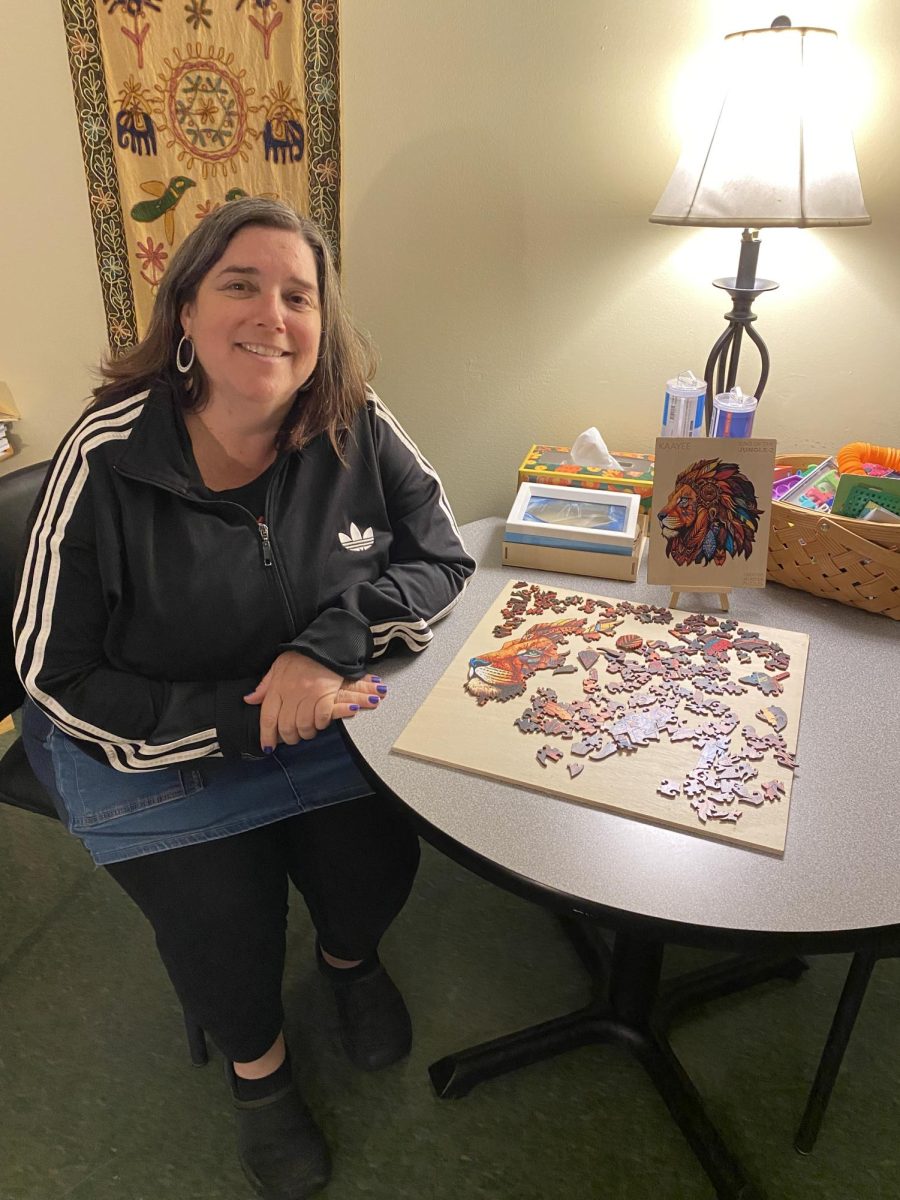
“The new schedule is not equitable for academic support classes,” said Sarah Lund, a special educator at U-32.
“[Special education is] supposed to focus on catching kids up and also keeping them caught up,” said Melissa Wheeler, a U-32 special educator. “But with this schedule, we can’t do both. We can either provide intervention or we can help them with their homework…. There’s not enough time in the schedule for us to do both.”
Due to the new schedule, high school academic support classes are only offered as classes one, two and three. Because of this, students receiving academic interventions are missing opportunities to take electives and are getting less intervention time. “This scheduling challenge creates inequity for students who have learning gaps and/or learning differences as compared with their peers who do not have such needs,” said Jenn Ingersoll, High School Literacy Interventionist.
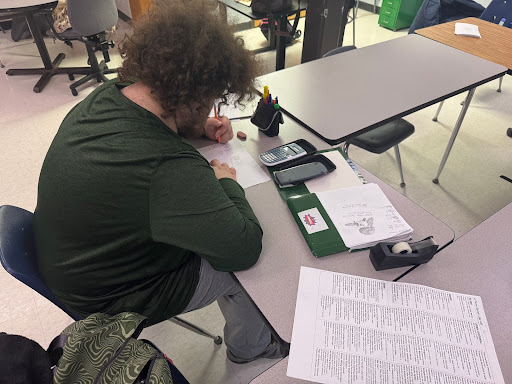
Last year, students received two 60-minute periods of intervention per week, totalling in 180 minutes per week. The new schedule reduced that to two 50-minute periods per week. For students who have to receive speech/language service during intervention time, intervention time is reduced to 65 minutes per week. “This is not enough contact time with interventionists to move the needle in the skills students are working to strengthen,” said Jenn. “The concern is that students will not be able to reach their goals with this reduced time.”
Students receiving special education have an IEP (Individual Education Plan) that dictates what services and accommodations they need. With the new schedule, “we had to write plans to fit the schedule instead of fitting the students,” Sarah said.
The new schedule has taken away service time. “For some students that might receive multiple services, it’s very hard to follow any programs with fidelity,” said Sarah. “We have a bunch of kids who need support in lots of different areas. They need math help, they need reading instruction. They need writing help. They need executive functioning. Some of them need speech and language, or they need to work with the… occupational therapist… Because of the schedule, it all has to happen during classes, one, two and three,” said Melissa.
“Last year, for example, I had students that I would work with… three days a week.. for an hour each time. So that’s three hours a week of reading instruction. And they could also get three hours of extra math instruction a week,” Melissa said. With the new schedule, those same students get 200 minutes a week, in which they now have to “get their reading, their math, and they have to work with their SLP,” said Melissa.
Last year, Melissa provided 3 hours of weekly reading support to a specific student. This year, she can see this student twice a week for two fifty minute periods. “During that time, she has to go see Erica, so then that takes away another half an hour,” she said. “She was getting three hours a week of extra reading instruction, and now she’s getting one hour a week of extra reading,” Melissa said. “This is a student who’s in the 10th grade and reads at a fifth grade level, so obviously, in order for us to boost her skills, she needs more time to be able to do the reading instruction.”
Within those three academic support periods, Melissa can’t help every student. “They now have to work with other people who maybe don’t have the same qualifications that I do,” she said. “We have general education teachers who have been thrown into providing interventions for students, even though they may not have the specific training,” said Melissa. “There was no thought put into who was providing the service, either. They just based it on the schedule.”
Both Melissa and Sarah mentioned general educators who said they did not feel equipped to provide interventions. “As a high school English teacher, you go to school to teach kids how to write essays and do… higher level writing. But we have some students that… need help just doing what’s called decoding. That’s sounding out words, figuring out the root of a word, the meaning of a word… A high school English teacher has never been trained how to teach kids to do that,” Sarah said.
Melissa acknowledged pushback from administrators suggesting to put students in two academic support classes. “Given the seven class structure, if we put them in two academic supports, that means they cannot take art, they cannot take a foreign language if they want to, they cannot take woods, they cannot take chorus, they cannot take the classes that might actually get them to come to school,” she said. “I have a kid who told me that if they didn’t let her go to chorus, that she would not come to school.”
Despite this, many students receiving special education services have had to sacrifice electives in order to take required academic support classes. One such student is 10th grader Violet Murphy.

“People who need to take an extra class for any reason later on in their high school years, just having less classes, they’re going to have overall less opportunities to do that, and it can be difficult to fit things in,” Violet said. “Taking Blue Table [academic support], I think it’s a good thing, but it takes away from other classes I needed to take, and so I’ll have to figure that out later on.”
“I didn’t end up being able to [take PE].. I just didn’t have room for it… I needed to take pottery too, and I didn’t have that opportunity this year,” Violet said.
Lydia Rathburn, a 9th grader also in an academic support class, had a similar experience. “It’s just kind of annoying because a lot of my friends and me, we can’t take the classes that we want because we had plans in mind with the eight class schedule,” Lydia said.
“It’s hard to handle academic support and also all of your classes as well…It’s a label that people put on you because you’re in this class. And it’s hard to not take the classes that you want to,” Lydia said.
At a principals press conference last month, Becca addressed this issue. “High school is four years… you still have a lot of opportunity for electives,” she said. She said there are ways to work around requirements to take electives.
Four bands of U-32’s seven class schedule are taken up by core subjects, with three bands that could be open for electives. But outside of what’s covered in core subjects, other proficiencies need to be met.
“There’s something that you’re supposed to take every year,” said Melissa. Three semesters of PE are required and typically taken in 9th and 10th grade, along with one semester of health. Taking a world language is not a graduation requirement at U-32. However, many colleges require at least two years of a world language. Driver’s education is also not a required course, but it’s an opportunity many students utilize. One semester of financial literacy is required in either 11th or 12th grade.
While there are technically fewer classes you have to take in your senior year, “[should] you have to wait until your senior year to take classes that you want to take?” asked Melissa. This is a relevant question to all students, but it only deepens when you take academic support classes into account.
“67% of kids with disabilities graduate high school within the traditional four years. 76% graduate within six years. But that’s still a fourth of our kids with disabilities that aren’t graduating high school,” Melissa said. “So we’re going to take away the support that they need? [We] take the kids that need the most and give them the least.”