


Who controls your money? What power do you have over your own life? U-32 Middle and High School was the third school in Vermont to require financial literacy for all juniors and seniors. This program began when George Cook, a business education teacher, spearheaded this project.
“When George got hired he met with me to propose that financial literacy become a graduation requirement…we put a proposal together that went to the board to make financial literacy a graduation requirement because all of us felt so strongly that students needed education in becoming financially literate,” said Lisa LaPlante, the Director of Student Services.
The program was up and running roughly fourteen years ago. After George introduced the idea and he and Lisa implemented it, George was joined by Bonnie Gadapee. Together the two of them teach all juniors and seniors financial literacy to prepare them for the future.
“I feel like not all students learn this at home, and even if they do, you can never learn too much about how to manage your money. So, I think it’s a good tool for students to understand how to do it, rather than not learning at all or learning the hard way by making mistakes. And some mistakes financially can be a huge setback for you,” Bonnie said.

U-32 requires a semester-long financial literacy class for all students to graduate. In addition, both George and Bonnie teach other business and economics courses. George has worked hard to make financial literacy a requirement, “And I think kids who don’t have access to this it’s a real letdown. Everybody needs to know all of these concepts, and they don’t,” he stated.
George’s push for the requirement of this course was not based solely on a need for students to know this, but also on a love for teaching about money. “I love talking about money with students, because there’s a lot of unknown. When you’re 16 and 17, you don’t understand fully how insurance works. Or how the stock market works. So it’s great that we are giving this learning to [you] young because you guys are young adults,” George said.
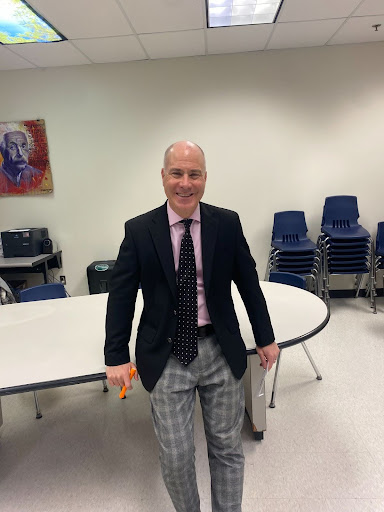
George said, “I believe it’s a great decision, because I think it is one of the few skills that is taught in school that students need for a lifetime.”
Bonnie said, “Back in the day, mostly men managed money in a marriage. Then, when I was no longer married, I needed to learn how to manage it myself, and I thought ‘well, instead of learning this in a sticky situation…be proactive, and learn how to manage your money.’” This class is a form of empowerment and inspiration for many.
The skills learned in the financial literacy course are not just how to manage money but the behaviors of managing money as well. “I don’t think it’s a class in math. People think that it’s about math. And sure, it’s mathy, but to me…I think it’s very much about the psychology, the behavior, the discipline and the decisions that people make with their money,” said George.
Bonnie and George both teach these behaviors in their classes. Bonnie says that how parents handle and manage their money is usually reflected in their children. “I would say that financial literacy, or your finances, are a behavior. I would just say it’s how to manage your money, set goals and just control where you’re spending and keep track of your money, your income, and make smart decisions, hopefully, to plan for your future” said Bonnie.
George expanded even further on this idea, “Hope, desperation. There’s a lot of behavior in psychology associated with money management, and I think that is it’s something hard to teach and score on, but you very much need to be aware that that is part of how money management operates,” George said.
George and Bonnie work hard to make sure that their course is both engaging and informative. George said that the main purpose of the course is “giving people the knowledge to understand all of the different factors that come into you properly managing your money. That can be cash budgeting, credit, debt, insurance, investing, and saving.”
Students share this opinion “I feel like it teaches kids a lot about money and how to be better with it, because a lot of kids are really bad with money. I’m not great with it, and now I’m still not super good with it, but I feel like I know a lot more about it. I’m a lot more prepared,” said Zack Aldrich, a U-32 senior.
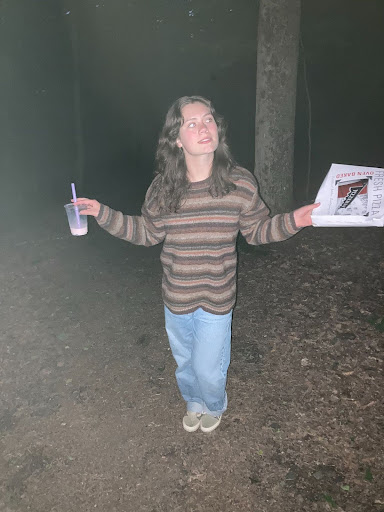
Maeve Daloz, a junior, echoed this sentiment, “I think that the content is very beneficial.” Students believe that this class truly helps prepare them for their futures.
George would love to take things one step further. “I’d love to do more. I’d love to have a young investors club here at school, or financial literacy two, for students that are really interested in studying finance or accounting later on,” George said. On November fifth, George and a U-32 senior, Lei DeGroot, sent out a form to gauge student interest. Students who would like to learn more about investing should fill out that form and go to the following callback.
Soon, U-32 may not be in the minority of schools who require a personal finance class for much longer. The new education bill that passed in the Vermont State Congress may impact financial literacy. “As far as I know, financial literacy will be part of that requirement,” Lisa said. There are many changes that U-32 will need to make with the implementation of the new education bill but this is not one of them.
George said, “I don’t think it was a good thing. I think it was a great thing.”


