


Budget cuts, declining enrollment, and analysis of student data has created a new schedule for U-32 this year. Changes include going from students taking eight classes to seven, and going from five to six class periods per day.
On Wednesday, students go to four classes and two callbacks. Directed study, a study hall period for freshmen and some sophomores, has also been removed as an option for students this year.
“We know from some data that many of our students in ninth grade in particular were not taking advantage of an eight class schedule,” said Becca Tatistcheff, the principal at U-32. This was deduced from the large percentage of students that had directed studies last year.
“The numbers that we worked with was that ninety-three out of one hundred and thirteen ninth graders last year had [a] directed study. They were not taking eight classes,” Becca continued.
Many people disagree with the interpretation that this is a bad thing. “I really feel like in ninth grade especially, directed study was important,” stated Béatrice David, a French teacher at U-32.

“I think having some time during the school day to do some school work, or just some time to have a gap […] is important for their life” she continued.
Benjamin Capron, a sophomore at U-32, shared his sentiment. “Directed study was important to me doing my work,” he said.
Students and teachers have personal complaints about the new schedule. “It is non-beneficial to not only the students, but also the teachers,” said Jacob Greenberg, a sophomore at U-32.
Teaching more classes per day has put a burden on some of the teachers and forced them to adapt. “I have needed to adjust my curriculum,” said Brian Albee, a U-32 Earth Science and Biology teacher.
Béatrice shared this experience. Preparing a class for 50 minutes is not much less work than for an hour-long class.
Béatrice is now having to prepare for more classes, which is more work for her. The lack of time between classes leads to a rushed feeling.
“I know there was a lot of teachers who are very, very, very overwhelmed at this point. I’m not the only one,” she stated.
Students can also feel a change from the shorter classes. “I feel like less is getting done in class, so you go home with more work because there’s shorter classes,” said one U-32 student, Lillian Odell.
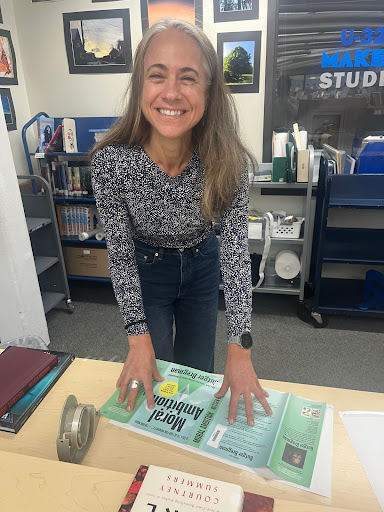
The move from eight class slots to seven has had effects on the freshmen and sophomores’ ability to choose their classes. “I have concerns, like other people might have, about the ability for students to take elective courses or courses in the arts that go beyond what they’re required to take for graduation,” said Meg Allison, one of the librarians at U-32.
This has been true for many elective courses including languages. “As a French teacher, it’s obvious that some students are having to make hard choices,” said Béatrice.
Jacob has struggled to fit the classes he wanted into his schedule this year. He had to do his French studies independently from the official French class in order to even take the language. He also has a slot in his schedule he is unable to fill.
This could be filled by a free band, but free bands have been made mostly unavailable to freshmen and sophomores this year. “I have seen anecdotally, ninth and tenth graders finding it harder to find time in their schedule to do their homework, or to be in the library and check out books,” Meg said.
Another concern among many students is their ability to continue taking multiple AP courses while also completing their proficiencies. Many students feel that they have had to make difficult choices concerning the amount of AP courses they can fit into their schedule.
“You have classes that you might need to take before you’re allowed to take an AP course, and that’s something that we’re going to continue to look at,” said Becca. She also highlighted that AP courses are “setting you up for particular college paths, APs are one example of that. But there are lots of other examples…, whether it’s dual enrollment, which is also provided. It’s the variety of courses that you take. It’s the way in which you present as a student.”
One of the other sources of confusion has been the new callback schedule. “Wednesday callback is the one that everyone’s raising an eyebrow about,” said Brian.
The callback on Wednesday is split in two. This has students going to two different places for callback. For freshmen and sophomores, these periods are split by lunch.
While some people appreciate having two callbacks, there are other opinions. “Is it really something that I found useful? I don’t think so,” said Béatrice.
Special educator Lauren Manning has seen struggles arise from the removal of class eight as well. Typically there are two different kinds of academic support classes. The first is academic support and the second is Bluetable, which is a more intensive class run by a special educator.
“If you are a student that needs both levels of support, you then don’t have any space for art or music or tech. And basically, you’re getting in the bare minimum,” said Lauren.
The new schedule is described by Lauren as “unequitable for any students that have a learning disability of any kind’’. This includes the difference between 9-10th graders and 11-12th graders.
“If you are an eleventh or twelfth grader, but you need to take a ninth or tenth grade class, those schedules don’t mesh,” said Lauren.
“For a student with a learning disability who takes longer to process or needs extra help with their homework or more time on their summatives and formatives, it’s really not allowing them to get what they need,” Lauren stated.
There has been one thing agreed upon by most. The change to having five minutes of passing time from four has been a game changer. “ I’m seeing a huge reduction in tardies to class,” Brian stated.
But is that enough? Many believe it will just take time to get used to the schedule.
Brian said,“Okay, it’s something new. Change is difficult for everybody, but we’re getting there.”