


This article was written by Avery Ryan, an editor of the U-32 Chronicle.
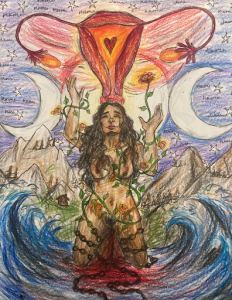
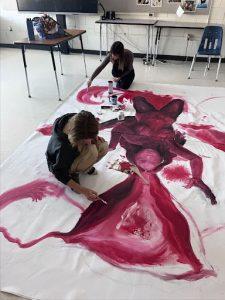
“It’s all very, very hidden,” said Leela McCann, a U-32 junior. Leela along with 4 other juniors are working to educate the community about the United States’ unknown history of women’s reproductive justice. This spring, U-32 should expect a new reproductive justice mural created by the group. “We [have] decided to send the message of empowerment through art,” said group member Mayla Landis-Marinello.
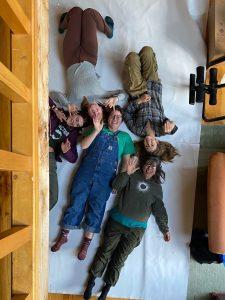
This project was made possible by The Pilot, a U-32 program that allows students to have mentored learning opportunities not found in the classroom. Last year, this group studied reproductive justice with mentor Kayla Becker, a health practitioner and educator at the Abdominal Therapy Collective. Kayla guided them in studying topics alternative to what is normally taught in health class. The history of reproductive rights in the US especially, according to the group, is what inspired them to promote their learning to the public this year. “It really jump started these student activists,” said Kayla.
“We were all interested in social justice and feminism, and then we were learning about these things and then [it] kind of became a project,” said Ella Thomas, another group member. In addition to the mural, the group has created an activism organization Health Education and Rights Vermont (HERVermont). Their organization has collaborated with HERGhana, and has raised money to send menstrual products to a village in Ghana. The group hopes to collaborate with HERGhana more in the future, according to Mayla.
Through learning of the US’s complicated history with reproductive rights, the group was motivated to continue their activism. For example, the US’s 1918 Chamberlain Kahn Act implemented the American Plan, which aimed at preventing the spread of venereal disease after World War l. This Act prevented the spread of information relating to reproductive health. “But attached to that law was the ability to also incarcerate whoever might be suspicious of having this disease,” said Kayla. According to the group’s research, 99% of the people incarcerated were women. “My big question is, what happened to the men?” said Kayla.
The mural aims to bring attention to these events in US history and inspire activism around reproductive justice. The current political climate around reproductive rights is a driving force for the group’s activism. “The Chamberlain-Kahn Act and the American Plan are just ideas that are still brewing,” said Kayla.
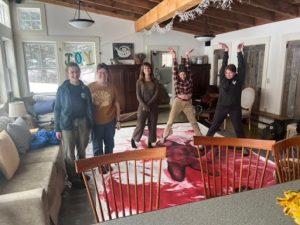
To celebrate its completion, the group is planning to have an opening event in March (also National Women’s History Month) at the Montpelier Performing Arts Hub to educate the local community. “But the goal is it would travel around the state of Vermont. Our dream is to have it in the state house,” said Mayla.
What started out as a replacement for traditional health class, has grown to something much bigger. The group can now call itself an activist organization whose website can be found here, they have created posters and pamphlets raising awareness posted around the school, and their research will be represented through art this spring. “We can’t vote yet. We don’t have a lot of say in politics, but we have a lot of opinions about it,” said Mayla.


